Art and state ideology
A Gentleman in MoscowArt and state ideology describes the novel’s account of a persistent tension: the state seeks art that communicates a clear political message, while art’s ambiguities allow audiences to read against that message. Anna Urbanova’s changing fortunes make the tension personal and concrete. Her career moves from celebrated historical romances to political suspicion and lost status, then back toward prominence in a realist film about factory workers. Alongside her story, the novel shows how political priorities can make artistic standards seem to change, and how administrative systems attempt to render people and work legible through categories, procedures, and records.
Art as a Political Instrument
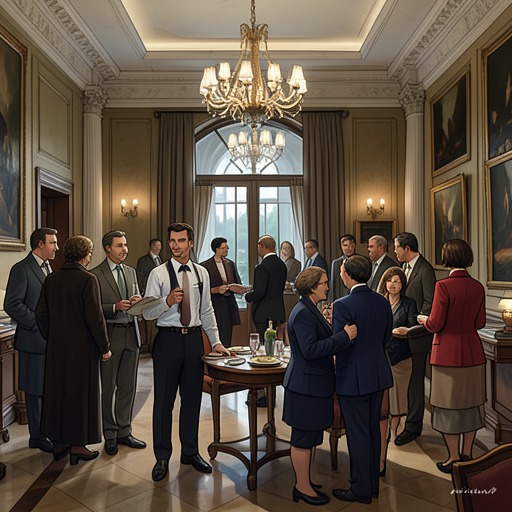
Anna first becomes a star through films directed by Ivan Rosotsky, who places contemporary moral ideals in the palaces of the past. In one film, she plays an eighteenth-century kitchen maid whose young nobleman abandons courtly privilege; in another, a nineteenth-century heiress turns from her inheritance to marry a blacksmith’s apprentice. These stories praise those who work and disparage those who do not. Their class message suits the political moment: the Politburo welcomes entertainment that offers relief from the war years while remaining appropriately themed.
The films’ style is part of their appeal. Rosotsky sets his fables in palaces, gives them a dreamlike, softly remembered look, and closes each act on Anna: aspiring, distraught, and finally in love. The close-up makes the individual star, rather than collective action, the films’ organizing presence. That feature becomes politically consequential when the official standard changes. Art can be commissioned to serve the state, but it is made by people who tire of repetition; its ambiguity means a raised eyebrow or a hint of sarcasm may reverse the apparent force of a carefully constructed message. In the novel’s account, the problem is not simply whether art has a political theme, but whether authorities can control what its forms and images permit audiences to see.
A Change in Official Taste
At the Moscow premiere of Rosotsky’s fourth film with Anna, the audience reads Joseph Stalin’s subdued response as a warning. The reaction travels through the theater: those in the orchestra section restrain their enthusiasm, affecting the mezzanine, then the balcony. Before anyone publicly states that the film is disfavored, the audience has begun to sense a change in political weather.
Two days later, an ambitious apparatchik publishes an open letter in Pravda. He criticizes Rosotsky’s repeated return to princes, princesses, waltzes, candlelight, and marble stairs, reading these settings as nostalgia. He also objects to the stories’ emphasis on individual trials and triumphs and to the director’s reliance on close-ups. The criticism demands historical immediacy and collective struggle: not merely a different subject, but a different account of what should occupy the screen and whose experience should matter.
The letter’s effect is reinforced by political endorsement. Four days after its publication, Stalin compliments its author before addressing the Plenum. Two weeks after the Plenum, the letter’s substance and even some of its phrasing reappear in three newspapers and an arts journal. The film receives only limited distribution to second-rate theaters and muted applause; by autumn, Rosotsky’s next project is uncertain and his political reliability is questioned. Criticism thus works as more than aesthetic review. A leader’s response helps turn one critic’s interpretation into a repeated public standard, with consequences for a director’s career and for the circulation of his work.
Anna is exposed to the same reversal. She avoids appearing publicly with Rosotsky and praises other directors, trying to distance herself from his political fall. But the arrival of talking pictures creates a separate obstacle: audiences who had imagined her speaking in dulcet tones are unprepared for her husky tenor. In spring 1928, at twenty-nine, she is no longer a star. Her loss of favor is therefore not reducible to censorship alone. Political suspicion, changing technology, and audience expectation converge, even as her face remains alluring on screen.
Loss, Labor, and a Different Screen Presence
Anna’s former status had carried material privileges. She had joined the All-Russian Film Union, received access to its stores, used a dacha near Peterhof, and occupied a former fur merchant’s mansion furnished with gilded chairs, painted armoires, and a Louis Quatorze dresser. These objects and residences disappear within months, reclaimed for other uses. With two trunks of clothing and her dresser, Anna could have taken the train to her hometown outside Odessa; instead, she moves into a one-room apartment and refuses to go home. The shift from mansion to rented room gives political favor a material measure: artistic prestige had been accompanied by property and access, and its loss reaches into everyday life.
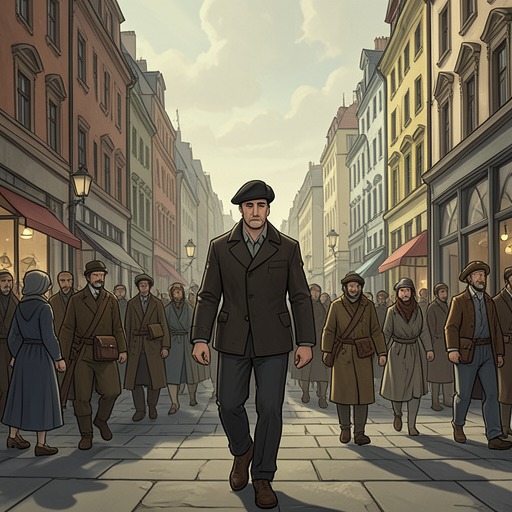
Her return to the screen comes through a role unlike the romantic leads that made her famous. She plays an unnamed middle-aged factory worker, her hair drawn back in a kerchief, in a plant struggling to meet its quota. With two weeks remaining in the quarter, the workers gather to explain their expected shortfall in a letter to Party leadership. Anna’s character rises to argue for pressing on; the workers renew their efforts and exceed the quota. The camera moves close enough to register a woman who is no longer young or ravishing but remains proud and unbent. The husky voice that had disappointed audiences in the transition to sound now lends authority to a worker whose experience is associated with roads, childbirth, and the factory floor.
At the film’s premiere, a former admirer of Anna’s—once the director of the Moscow Department of Cinematographic Arts and now a senior Ministry of Culture official—responds strongly to her performance. He urges directors to see it and sends lilies to her room when she is in Moscow. The narrative does not make this intervention the sole explanation for her recovery. Anna is a stage-trained artist; after her fall, she has become punctual, knows her lines, and does not complain. As official preference turns toward realism and perseverance, both her seasoned beauty and her husky voice find a place. Her resurgence arises from her own discipline and ability as well as from a renewed political appetite for the kind of film in which she can work.
Administrative Legibility and the Limits of Control
The film industry’s changing standards belong to a wider pattern in which institutions translate complex conditions into official categories and procedures. The novel’s account of the First Five-Year Plan links industrial expansion to demands for greater agricultural production and more bread for the cities. The removal of a million kulaks takes many of the regions’ most capable farmers; remaining peasants distrust new methods, tractors are scarce, and adverse weather compounds the decline in output. Yet quotas and requisitions rise and are enforced at gunpoint. The distance between a national plan and agricultural reality becomes visible in its consequences: the policy’s simplified demands do not resolve the practical conditions that obstruct production.
A smaller administrative system at the Boyarsky Restaurant offers a different, everyday example. Its new ordering process sends each request from waiter to bookkeeper, then to the kitchen through a cooking slip; a kitchen log and confirmation slip precede the stamped receipt authorizing the waiter to retrieve the food. Each transaction is recorded and checked. The procedure makes work traceable, but it conflicts with the service expected under the Count’s supervision, where waiters look customers in the eye, answer questions, and remember preferences without writing at the table. The contrast is not that all written systems are inherently oppressive; it is that formal recording can displace forms of knowledge and attention that do not fit the record.
The same tension sharpens in the Bishop’s files on hotel staff. The cabinets contain reports on operations as well as alphabetized files on employees, including Arkady, Vasily, Andrey, Emile, and Marina. The individual files collect instances of tardiness, impertinence, disaffection, drunkenness, sloth, and desire. The Count recognizes that such observations need not be false, but they offer only a narrow account: he could assemble a far larger file of each friend’s virtues. This is the novel’s clearest image of institutional classification as a selective act. As with official judgments of films, a record can consist of accurate details and still distort the person it claims to describe by deciding in advance which details count.
Taken together, these episodes present state ideology not as a single message imposed once and for all, but as a shifting demand that art, labor, and individuals become readable in approved terms. Anna’s changing career exposes the instability of those terms: yesterday’s successful conventions become suspicious, while a voice once deemed unsuitable becomes expressive under a new aesthetic preference. Her talent does not abolish political power, and political approval does not fully account for her craft. The tension between the two is what makes her return significant.